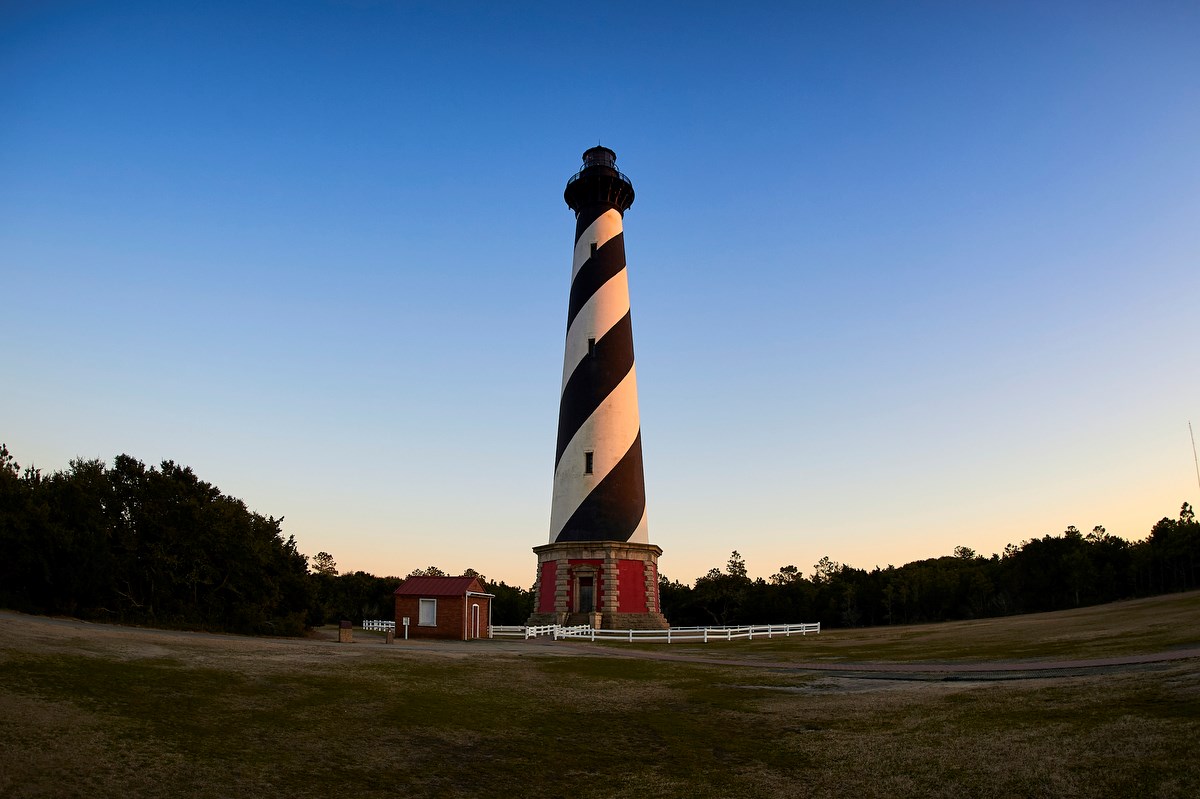
The Cape Hatteras Lighthouse protects one of the most hazardous sections of the Atlantic Coast. Offshore of Cape Hatteras, the Gulf Stream collides with the Virginia Drift, a branch of the Labrador Current from Canada. This current forces southbound ships into a dangerous twelve-mile long sandbar called Diamond Shoals. Hundreds and possibly thousands of shipwrecks in this area have given it the reputation as the Graveyard of the Atlantic.
History
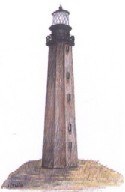
The first Cape Hatteras lighthouse built in 1803
Construction of a lighthouse at Cape Hatteras was first authorized in 1794 when Congress recognized the danger posed to Atlantic shipping. However, construction did not begin until 1799. The first lighthouse was lit in October of 1803. Made of sandstone, it was 90 feet tall with a lamp powered by whale oil.
The 1803 lighthouse was unable to effectively warn ships of the dangerous Diamond Shoals because it was too short, the unpainted sandstone blended in with the background, and the signal was not strong enough to reach mariners. Additionally, the tower was poorly constructed and maintained. Frequent complaints were made regarding the lighthouse.
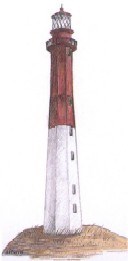 The first Cape Hatteras lighthouse after improvements
The new lighthouse was lit on December 16, 1870. The 1803 lighthouse was demolished in February of 1871. The Cape Hatteras Lighthouse received the famous black and white stripe daymark pattern in 1873. The Lighthouse Board assigned each lighthouse a distinctive paint pattern (daymark) and light sequence (nightmark) to allow mariners to recognize it from all others during the day and night as they sailed along the coast.
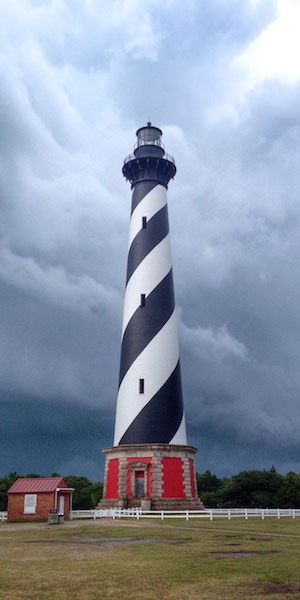
In 1999, after years of study and debate, the Cape Hatteras Light Station was moved to its present location. The lighthouse was moved 2,900 feet in 23 days and now lies 1,500 feet from the seashore, its original distance from the sea. The Double Keepers’ Quarters, the Principal Keeper’s Quarters, the dwelling cisterns, and the oil house were all relocated with the lighthouse.
For the full history of this iconic Outer Banks landmark follow this link
https://www.nps.gov/caha/planyourvisit/chls.htm


 The MLS IDX information on this web site is being provided to you by the Outer Banks Association of REALTORS® for general informational purposes only. Contact your real estate broker or sales person for the most up to date information regarding these listings. Real estate listings include the name of the brokerage firms and listing agents. THE OUTER BANKS ASSOCIATION OF REALTORS® AND OBXMLS.NET DOES NOT GUARANTEE THE ACCURACY OF THIS MLS IDX INFORMATION DISPLAYED ON THESE WEBSITE PAGES. THE
